Can You Play Old Cassette Tapes on New Cassette Players?
A shoebox of tapes you have not heard in thirty years, and no player left to hear them on. Here is whether a new one will play them, and how they will sound.
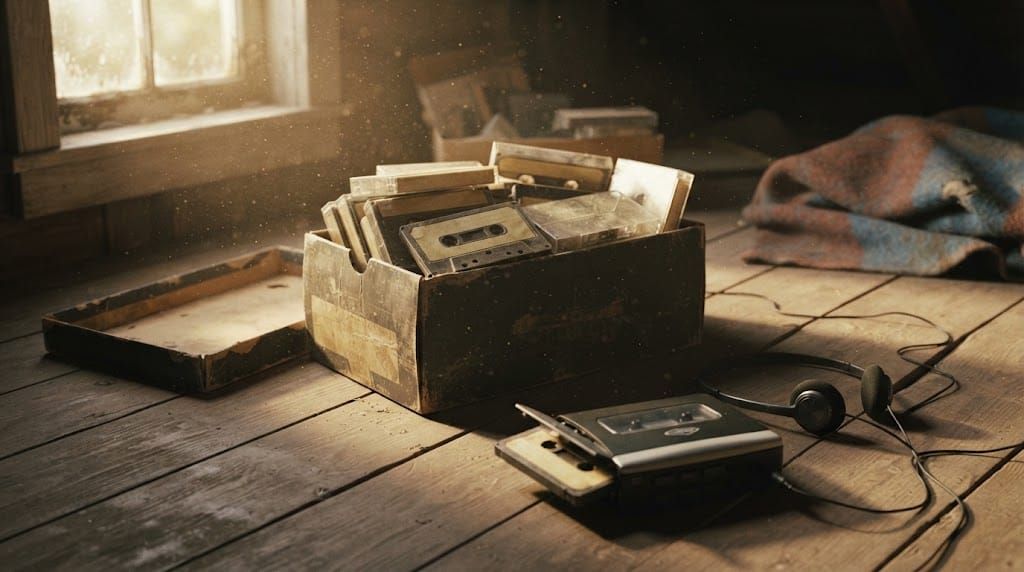
There is a shoebox somewhere. In an attic, under a bed, at the back of a wardrobe in your parents' house. Inside it are tapes you have not heard in twenty or thirty years: albums you bought with pocket money, recordings off the radio, a mixtape with someone's handwriting on the label.
The player they belonged to is long gone. So before you buy a new one, you want to know if those old tapes will even work in it.
The short answer
Yes. Any standard cassette, from any decade, will play on a cassette player made today. The format has not changed since the 1960s: the shell is the same size, the tape is the same width, and it runs at the same speed. A tape recorded in 1985 fits and plays in a player built this year.
A new portable cassette player is enough to hear what is in that shoebox. What differs is how the tape will sound, and that depends on two things: the kind of tape it is, and the condition it is in.
What can sound different
Cassettes came in several formulations. Most were normal, or Type I, tapes. Better blanks and many later albums were chrome, or Type II, and a few were metal, Type IV. Old hi-fi decks had a switch or a sensor to adjust playback for each kind. Most new portable players have neither, and treat every tape as Type I.
In practice, a chrome or metal tape will still play. It will sound brighter than it should, with more treble and a little more hiss. Turning the treble down, if the player or your headphones allow it, brings it close to right.
The same happens with Dolby. Many commercial albums and home recordings were made with Dolby noise reduction, marked by a small double-D symbol on the label. Almost no new players include it, so those tapes also come out bright. It is a different tone, not a fault, and many people stop noticing after one song.
Home recordings carry one more variable. A tape recorded on a deck that ran slightly fast or slow, or whose head was a little out of line, can sound a touch off in pitch or duller on any other machine. That was true in 1990 too.
The tape itself matters more than the player
Thirty years in a box is harder on a cassette than any new player will be. Before you press play, look at it.
Check the small felt pad that sits behind the tape in the centre opening. If it has fallen off, the tape will sound muffled and uneven. Look through the window at the reels: the tape should be wound flat and smooth, without ripples or a loose loop. If you see white or grey dust on the tape surface, that is mould, and it should not go into a player until it has been cleaned, because it will spread to the heads and to every tape you play afterwards.
If the tape looks sound, fast-forward it to the end and rewind it once before listening. This loosens layers that have been pressed together for years and lets the tape run evenly. Very long tapes, the 120-minute kind, are thin and fragile, so treat those gently.
Old tapes also shed a little. After playing a few, clean the player's heads with a cotton bud and a drop of isopropyl alcohol, and the next tape will sound clearer. From then on, keeping them upright, cool and dry makes a real difference, and there is a full guide on how to store and protect a cassette tape collection.
Which new player to choose
For old tapes, a simple, well-reviewed player is all you need. Look for a headphone output, a solid door and, if you want to hear them through speakers, a line out or Bluetooth. This guide to the best portable cassette players you can actually buy covers the current options and what each one is good for.
Do not expect silence. Cassettes have hiss, a slight waver in long notes and a softness at the top. That is part of why cassette tapes sound better than you remember: the sound is tied to the time you first heard it.
When the tape is too far gone
Some tapes do not survive. The pad is missing, the tape has snapped, or the recording has faded to a murmur. If the one you lost was a mixtape someone made for you, the songs are still out there even if the cassette is not.
The tracklist can be rebuilt, song by song, and put onto a new cassette. Or you can make one for someone else, so that one day there is a shoebox with a tape from you in it.
When you're ready, start creating your own mixtape.