Why Cassette Tapes Sound Better Than You Remember
Cassettes don't measure better than digital. But there's a reason they sound warmer, more intimate, and more present — and it's not just nostalgia.
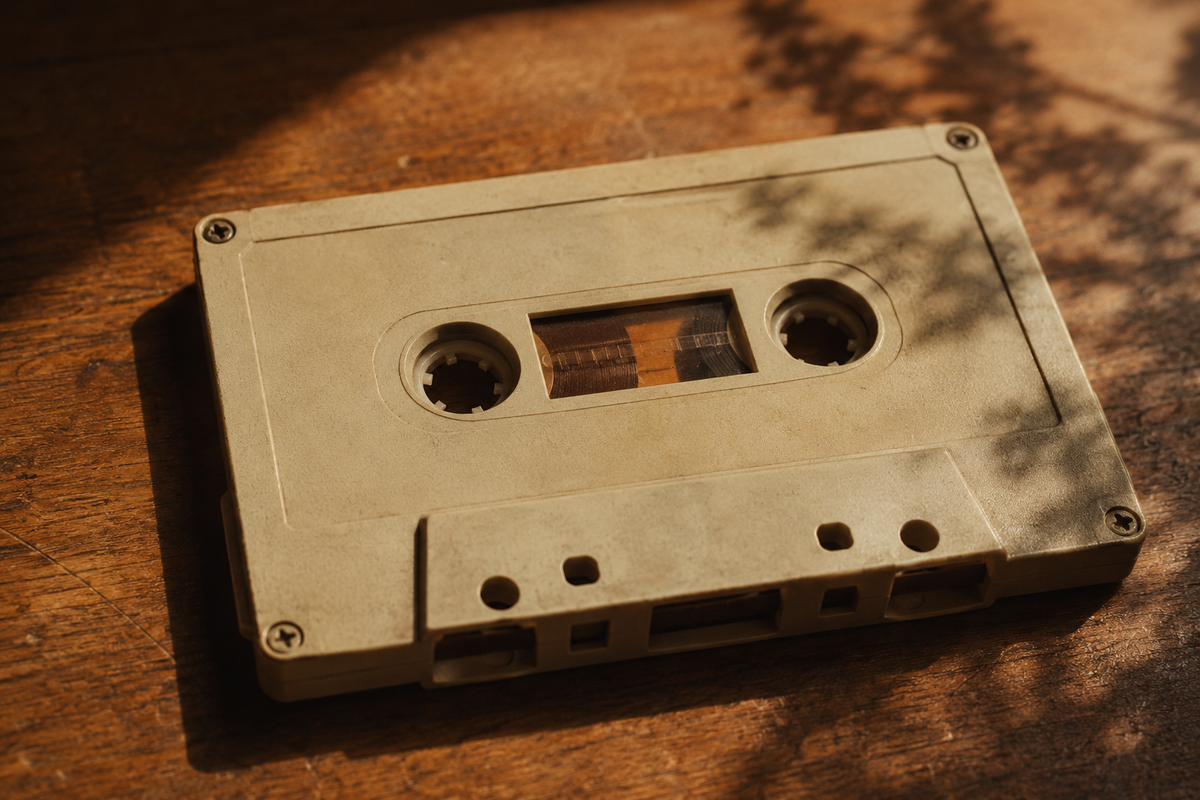
There's a moment that happens to almost everyone who puts on a cassette after years away from them. You press play, the tape starts moving, and before the music even begins you hear it — that quiet, warm hiss. And instead of reaching for the volume to correct it, you lean in.
That reaction surprises people. We've spent decades being told that cleaner is better, that digital perfection is the goal. And then a piece of magnetic tape proves that something about us never fully believed it.
The argument against cassettes is easy to make
Nobody is going to claim that a cassette tape measures better than a FLAC file. The frequency response is narrower. The noise floor is higher. Every copy degrades slightly from the one before it. On paper, tape loses.
But sound isn't paper. And the way we experience music has never been purely about technical accuracy.
What cassettes do — and what digital formats genuinely don't — is introduce a kind of texture. A slight compression of the highs. A softness around the edges of the sound. A warmth that, depending on the tape formulation and the machine, can make certain music feel closer, more intimate, more present than its digital counterpart. This isn't a malfunction. It's a character.
Why analog compression works differently
When audio is recorded to tape, the magnetic particles on the ribbon don't behave like a hard drive. They saturate. At higher volumes, they gently clip in a way that is smooth, rounded, and — in small doses — genuinely pleasing to most human ears. Engineers call this harmonic distortion. Listeners call it warmth.
Digital clipping, by contrast, is brutal. A hard edge, a snap, something the ear registers as wrong. Tape never snaps. It gives.
That's why so many recording studios never fully abandoned tape, and why modern producers frequently route audio through tape machines not to introduce errors but to add a quality that digital precision leaves out. The saturation, the slight compression, the imperceptible smearing of transients — these things make instruments feel like they occupy physical space.
And that feeling matters more than we give it credit for.
The lo-fi connection
If you've spent any time with lo-fi music — the kind that fills study playlists and late-night bedroom sessions — you already know what tape does to a sound. That genre didn't choose tape aesthetics by accident. Lo-fi culture is built on the idea that imperfection communicates something warmth cannot: that the hiss, the crackle, the slight flutter in pitch signals a human being made this, in a real room, at a real moment in time.
The same logic applies to listening. A cassette sounds like it was recorded somewhere. A streaming file often sounds like it came from nowhere in particular.
Nostalgia is real, but it's not the whole story
The easy dismissal of cassette enthusiasm is that it's just nostalgia. People who grew up with tapes romanticize the format because it's attached to memories — first cars, summer jobs, relationships that felt enormous at sixteen. And yes, that's part of it.
But the people coming back to cassettes now include a generation that never owned one. Gen Z has been buying tapes steadily for years, often on hardware they had to hunt down at thrift stores or order secondhand. They're not chasing a memory they don't have. They're chasing something they recognize is missing from the experience of digital music — something tactile, committed, finite.
You can't shuffle a cassette. You can't skip without consequence. You have to listen in sequence, flip the tape at Side B, sit with songs you might otherwise have skipped. That constraint turns out to feel like a gift.
The physical object changes the listening
There's something else happening that's harder to quantify. When music lives in your hand — when you can feel the weight of the case, see the tape move through the window, watch the spool turn — your relationship to it changes. We don't listen to music the same way we used to. Attention has collapsed. Skipping has become the default. A cassette resists all of that, and the resistance feels good.
This is why cassettes have never quite died. Not because audiophiles champion them — most don't — but because a certain kind of listener keeps reaching for them when they want music to mean something. When they want to be present.
When the sound becomes the gift
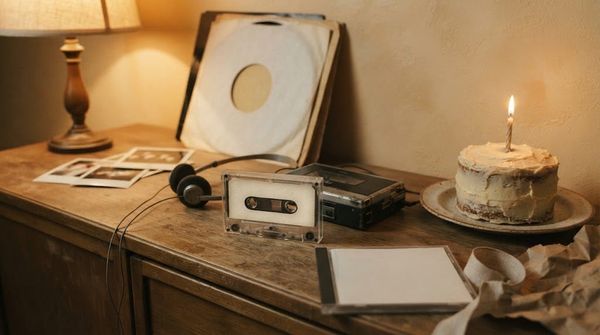
Tape's warmth takes on a different meaning when the music on it was chosen specifically for someone. A custom cassette isn't just a format preference. It's a statement: I took time. I chose these songs in this order. I thought about how Side A should end so that Side B feels like a continuation.
A cassette gift feels more personal than a playlist link because it is. The format itself carries the intention. You can't forward a cassette. You can't share it with a hundred people. It was made for one.
And the sound — slightly warm, slightly imperfect, unmistakably analog — becomes part of that intimacy. It sounds the way a handwritten note reads. Not flawless. Just real.
If you've been thinking about giving someone music in a way that actually stays with them, start creating your own custom cassette here. The format does more than you remember.