Why Cassette Tapes Sound Better Than You Remember
There's a warmth to cassette sound that digital formats don't quite replicate. Here's why cassettes sound the way they do, and why people keep coming back to them.
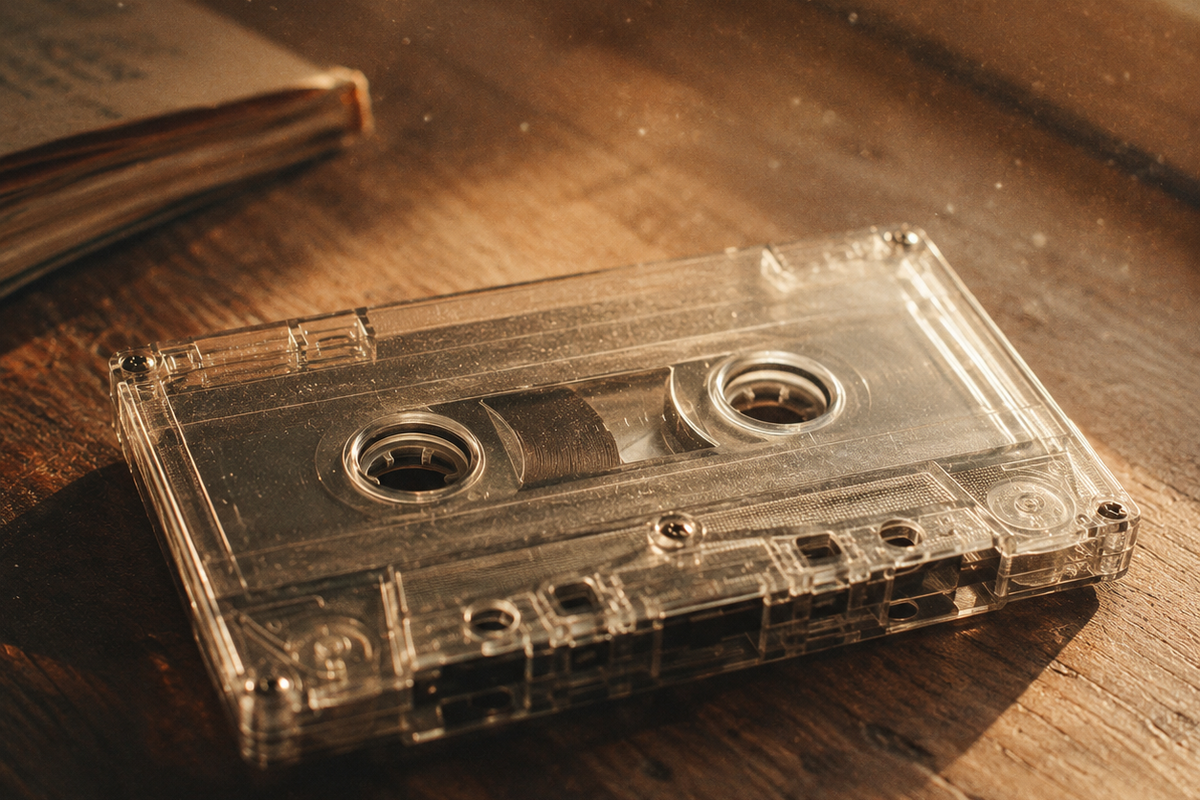
There's a moment, maybe ten seconds into pressing play on an old cassette, when something unexpected happens. The sound isn't perfect. There's a faint hiss, a slight warmth to the low end, a feeling that the music is coming from somewhere real rather than arriving through a wire. And instead of bothering you, it does the opposite. It pulls you in.
That's not nostalgia playing tricks. There's actually something to it.
For decades, cassette tapes were dismissed as an inferior format — lossy, fragile, prone to tangling. And in purely technical terms, some of that is fair. A cassette can't match the dynamic range of a CD or the resolution of a high-quality digital file. But audio quality is not the same as sonic experience, and that distinction matters more than most people realise.
What cassettes do — and what digital formats don't — is compress and colour the sound in ways that happen to be flattering to human ears. The magnetic tape introduces a natural saturation. The high frequencies roll off gently rather than cutting sharply. The low end has a roundness that can feel more like a room than a speaker. These aren't bugs. For a lot of music, they're exactly what makes it feel right.
There's a reason recording engineers still use tape saturation as a plugin on almost every modern mix. They're chasing something. The way analog compression breathes with the music rather than clamping it. The way a cassette recording doesn't sound sterile. Digital audio captures everything with precision — and sometimes that precision strips a track of the thing that made it feel alive. As we've written about before, physical music hits different in ways that are genuinely hard to explain until you experience them again.
Cassette tape adds imperfection in a very specific, musical way. Not random distortion, but a kind of gentle rounding of the edges. A physical medium imposing its own character on the sound. Listeners who grew up with cassettes aren't imagining the warmth. It was there. It still is.
Part of what people are rediscovering is also the listening experience itself. A cassette doesn't shuffle. It doesn't suggest what comes next. It plays side A, then you flip it to side B, and the order of the songs is the order someone chose — which means every transition was a decision. That structure changes how you hear music. You follow it rather than curating it in real time. It's part of why so many people are going back to offline music after years of letting algorithms decide what plays next.
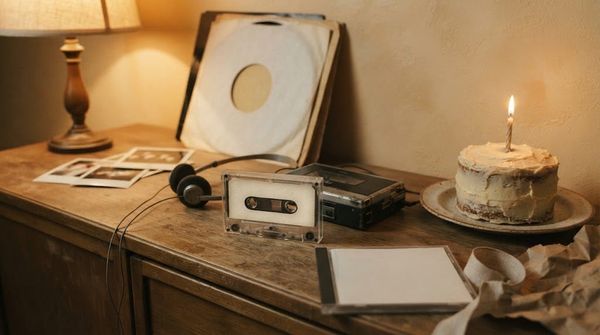
This is part of why mixtapes still carry so much meaning. A cassette mixtape isn't just a playlist with a different container. It's a sequence someone spent time thinking about, recorded in a fixed order, given to you with something in mind. The format enforces intention in a way a Spotify link simply can't. If you've ever wondered why a cassette gift feels more personal than a playlist link, this is a big part of the answer.
The cassette revival isn't purely aesthetic, and it isn't just Gen Z discovering something retro. Sales have grown steadily for several years. Independent artists release music on cassette because their audiences want something physical to hold. Collectors are returning to the format not out of irony but because they genuinely prefer it for certain kinds of listening. It's the same pull behind the broader physical media boom that's been reshaping how people relate to music they love.
Some music was made for this format. Lo-fi recordings, folk albums, bedroom pop, certain kinds of jazz — these don't always benefit from being heard in high resolution. The slight softening a cassette introduces can make them sound more intimate, more like they were recorded in the same room as you. There's a reason we keep craving tape hiss even when everything around us is moving toward pristine and frictionless.
If you've never pressed play on a cassette and felt that particular kind of presence — or if it's been long enough that you've forgotten — it's worth trying again. Not because it's better than everything else, but because it offers something different. Something with texture.
And if you want to give someone that feeling — a real mixtape, recorded on a real cassette, with songs chosen specifically for them — that's still one of the most personal music gifts you can make. Not because it's vintage. Because it took thought, and it shows. Start creating your own mixtape and see what it feels like to give music that means something.