Best Cassette Tapes to Buy Blank in 2026
More people are recording to tape than at any point in the last twenty years. Here's a clear-eyed look at the best blank cassettes available in 2026, and how to choose the right one.
The cassette comeback isn't slowing down. More people are recording to tape than at any point in the last twenty years — and that means the question of which blank tape to buy has become genuinely relevant again. Not in a retro-ironic way. In a practical, what-do-I-actually-put-in-my-deck way.
The short answer is that it depends on what you're doing. Recording music for personal listening is different from gifting a tape, which is different from building an archive, which is different from just wanting something that looks good on a shelf. There are a few options worth knowing about in 2026, and they don't all serve the same purpose.
If you want the most accessible starting point — something affordable, widely available, and reliable for everyday recording — a solid entry-level blank cassette does the job without complications. This option (view product) works well for anyone dipping back into tape for the first time, or for high-volume use where cost matters more than audiophile specs.
For anyone who grew up with tapes, Maxell needs no introduction. The UR series has been a trusted standard for decades, and it still holds up. Normal bias, clean frequency response, and the kind of consistency you'd expect from a brand that's been making these since the format was young. The Maxell pack (view product) is a sensible choice if you want a name you can trust and tapes that will perform without surprises.
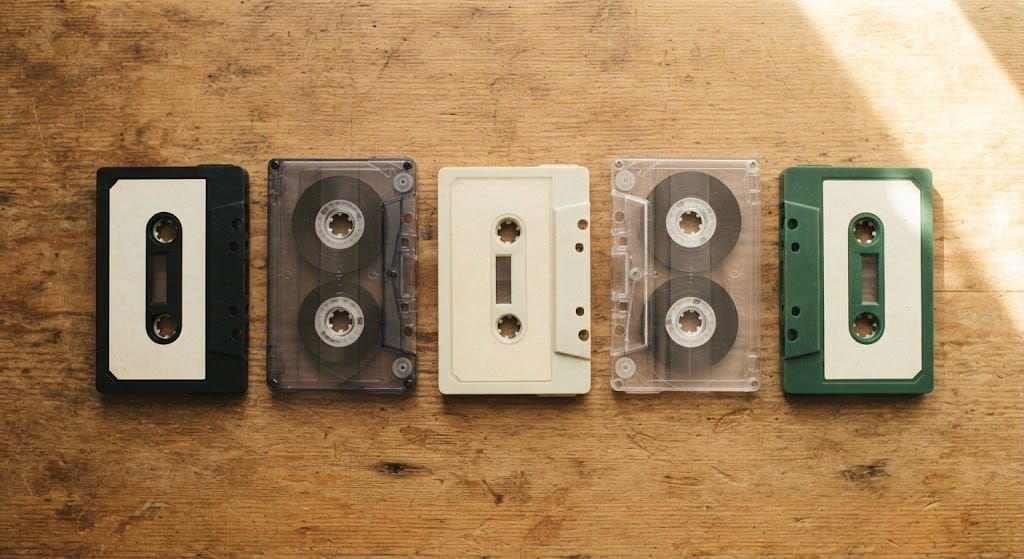
If the visual side matters as much as the audio — and for gifting, it often does — there are now options that come in multiple colors and styles within a single pack. This kind of cassette (view product) is more interesting to hand someone. The tape itself is what gets recorded and played, but the object they're holding is part of the experience too, and physical music carries meaning that goes beyond the sound.
For bulk use — a home recording project, a small label run, or stocking up for the long term — the Maxell brick format (view product) is the practical choice. You get more tapes per dollar, they store cleanly, and the quality is consistent across the lot.
At the other end of the spectrum, the TDK XLII-90 is for people who care about fidelity. Type II high-bias tape captures more detail in the high frequencies, which makes a real difference if you're recording from a quality source and playing back on a well-maintained deck. It's not necessary for casual use, but for anyone who wants the best possible sound from their cassette setup, the XLII is the tape to reach for (view product).
One thing that doesn't come up enough in these conversations: blank tape is only part of the equation. A cassette means something different as a gift partly because of the format itself — the physicality, the ritual of flipping sides, the commitment it represents — and that's true whether you're recording onto a budget tape or a premium one. The gesture matters more than the spec sheet.
That said, if you're going to take the time to record something for someone, it's worth using a tape that will hold up. Any of the options above will do that. The difference between them comes down to your priorities: cost, aesthetics, quantity, or sound quality.
When you're ready, start creating your own mixtape at customixtape.com.