Why Silence Feels Strange Without Music Now
Why does silence feel uncomfortable today? Discover how music and digital habits changed our psychology, and how to reconnect with intentional listening.
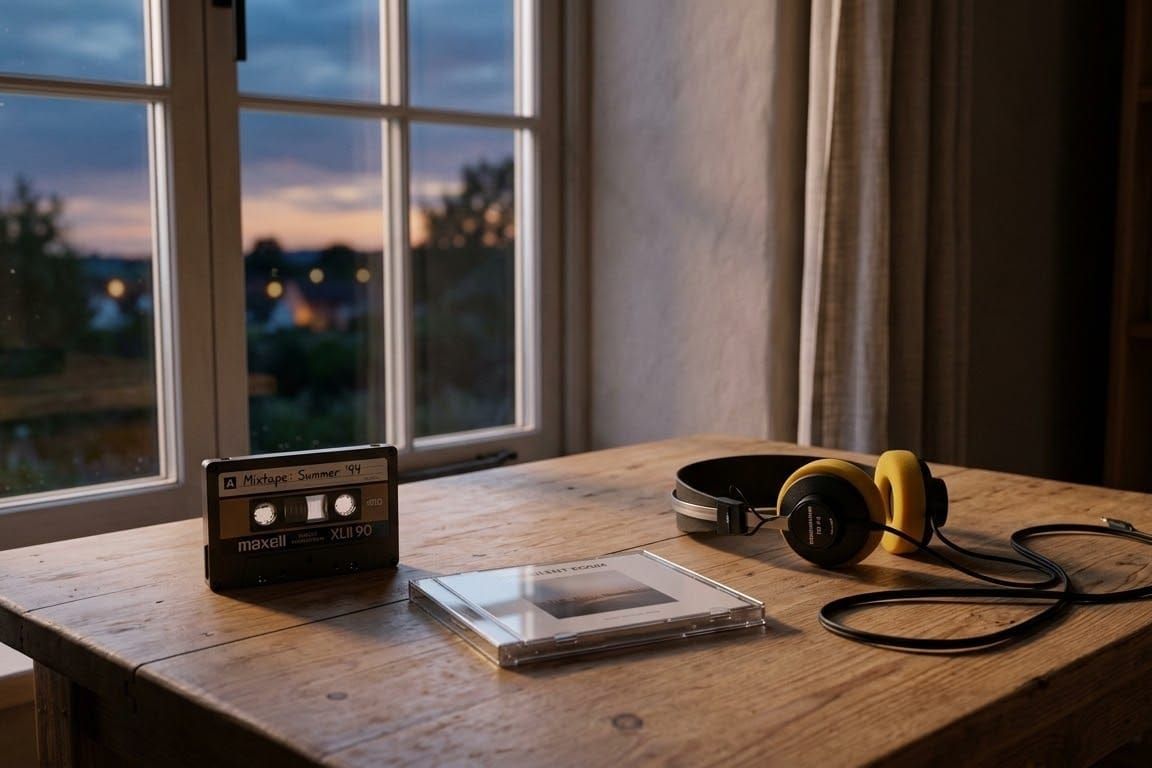
You step out the front door, reach into your pocket, and realize you left your headphones behind. Instantly, everything feels… wrong.
The street is louder than it should be. Cars don’t just pass, they roar. Your footsteps feel too present. Even your own breathing sounds amplified, like it doesn’t belong.
Later, you sit in your car. The Bluetooth refuses to connect. The silence inside the cabin isn’t peaceful. It’s uncomfortable. Almost suffocating.
So you do what everyone does.
You reach for sound.
Anything.
Music, radio, a random playlist. Just something to fill the space.
Because silence without music no longer feels neutral.
It feels like something is missing.
There was a time when silence was just part of life. It wasn’t something you noticed. It was the background where everything else happened.
Now it feels like an absence. Like a system error.
We’ve trained ourselves to live with constant sound. A personal soundtrack for every moment. Walking, working, cooking, driving. There is always something playing.
And when it stops, even for a few seconds, something inside us gets restless.
This isn’t random. It’s psychological.
Music has quietly shifted from something we experience… to something we depend on.
We use sound to regulate how we feel.
If you’re alone at home and the silence starts to feel heavy, you put something on. Not because you want to listen, but because you don’t want to feel the quiet.
If you’re commuting and your thoughts start drifting somewhere uncomfortable, you reach for a familiar song. It grounds you. Distracts you. Protects you.
Silence forces you to be present. And being present isn’t always easy.
So we avoid it.
Streaming platforms have built entire systems around this behavior.
Infinite playlists. Endless recommendations. Mood-based music for every possible state of mind.
Sad? There’s a playlist.
Focused? Another one.
Can’t sleep? Of course there is one.
We are constantly one tap away from changing how we feel.
But that convenience comes with a hidden cost.
It has destroyed our ability to just sit with music… or with silence.
That’s why it increasingly feels like we don’t listen to music anymore
We skip it. We use it. We jump between tracks chasing a feeling we can’t quite land on.
Music has become background noise for a distracted life.
And the more music becomes disposable, the more silence becomes uncomfortable.
Because we’re no longer used to it.
We’re used to constant input.
Constant stimulation.
Constant distraction.
But here’s the part most people don’t realize.
This constant noise is exhausting.
When everything is always playing, nothing really lands.
Songs lose weight. Albums lose meaning. Moments blur together.
Even the tracks that once meant everything to you — the ones tied to real memories, real people, real versions of your life — start to disappear into the background.
Those rare songs that bring back memories become harder to feel.
Not because they’ve changed.
But because the way you listen has.
At some point, you stop experiencing music.
And you start consuming it.
That’s why silence feels strange.
Not because it is unnatural.
But because we’ve forgotten how to exist without filling every gap.
The solution isn’t to remove music.
It’s to change how you interact with it.
To make it intentional again.
That shift happens the moment music becomes something you choose… instead of something that’s always there.
And the easiest way to force that shift is to step outside the algorithm completely.
When music becomes physical, everything changes.
You can’t skip endlessly. You can’t jump between moods every ten seconds. You can’t rely on an app to decide what comes next.
You press play… and you stay.
The format forces you to slow down.
It forces you to listen.
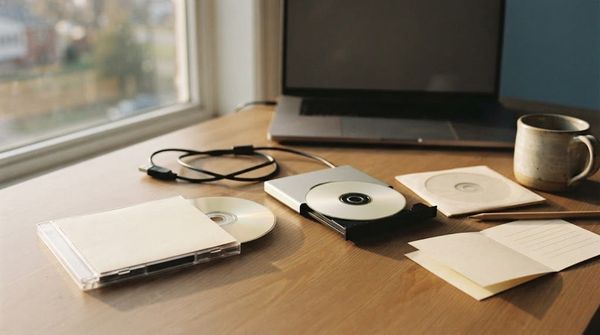
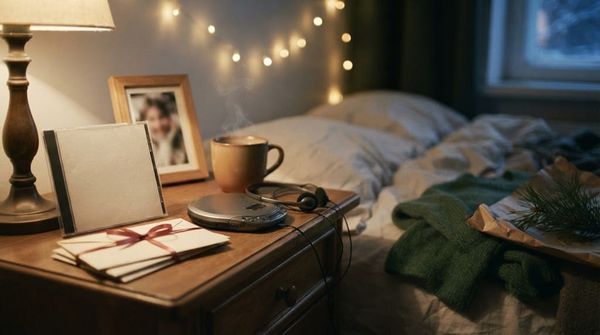
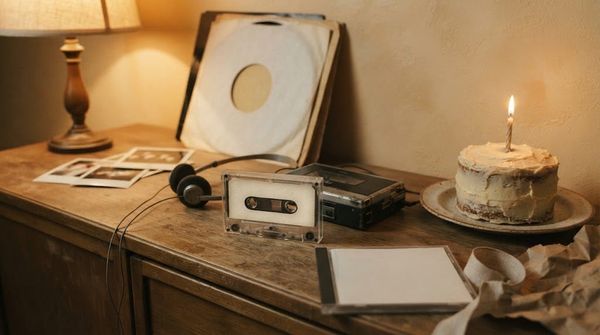
Holding a physical format — a cassette, a CD — turns music into something real again.
You see it. You touch it. You commit to it.
It stops being background noise and becomes an experience.
And when you take it one step further… when you actually build your own selection of songs…
that’s when it becomes something else entirely.
A custom mixtape gift isn’t just music.
It’s memory, curated.
It’s choosing specific moments and putting them in order.
It’s saying: this mattered… and this… and this.
No algorithm can do that.
Because meaning doesn’t come from convenience.
It comes from intention.
When you limit yourself — when you only have a fixed amount of time, a fixed number of tracks — every choice becomes important.
You stop skipping.
You start thinking.
You start feeling again.
And something interesting happens.
Silence stops feeling uncomfortable.
It starts feeling necessary.
Because now it has a place.
Before the music starts.
After it ends.
Between moments.
That’s what we’ve lost.
Not music.
But space.
You don’t need to remove music from your life.
You just need to bring meaning back into it.
Choose what matters.
Let it play.
And allow silence to exist again without needing to escape it.
Because the soundtrack of your life shouldn’t be something you scroll through.
It should be something you recognize.
Something you return to.
Something you actually feel.
Stop filling every moment with noise.
Start choosing what deserves to be heard.
And when it matters… start creating your own mixtape: