The Difference Between Type I and Type II Cassette Tapes Explained
That small word on an old cassette label, Normal, High or Chrome, was telling you how the tape wanted to sound. Here is what it means.
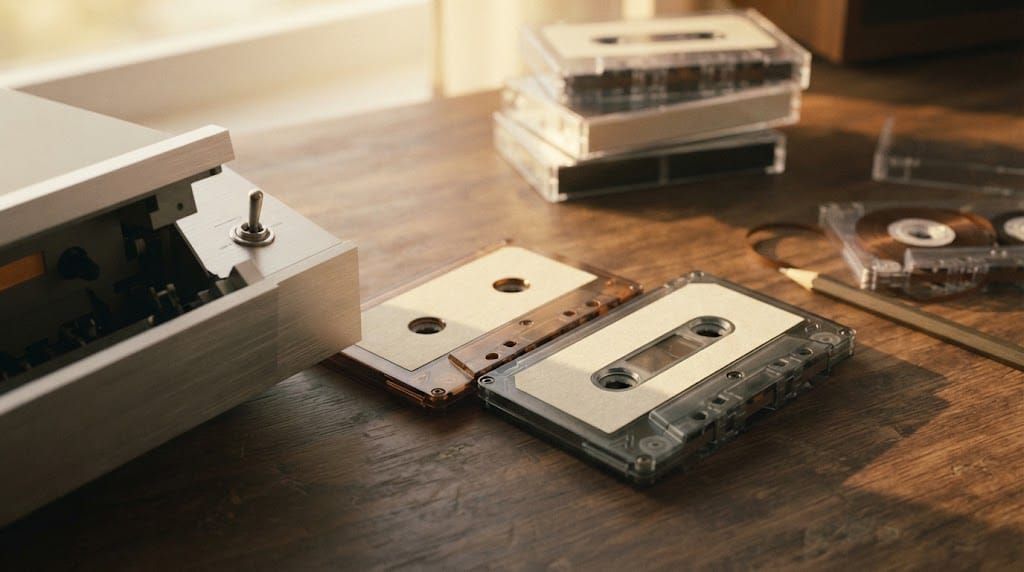
Pick up an old cassette and turn it over in your hand. Somewhere on the shell or the label, there's a small detail most people never noticed back then: Normal, High, Chrome, or a Roman numeral. It looked like packaging. It was actually telling you what kind of tape was inside, and how it wanted to be recorded and played.
If you're buying blank tapes today, digging through a box of old ones, or just curious why some cassettes always seemed to sound brighter than others, here is what Type I and Type II really mean, explained without the engineering manual.
Four types, two that matter
In the early eighties, the industry agreed on four official cassette types, numbered I to IV. Each one uses a different magnetic coating on the tape, and each needs the recorder to treat it a little differently.
Type III, a mix of iron and chrome, was rare even at the time and disappeared quickly. Type IV, the metal tape, was the premium choice: excellent sound, high price, and a deck that could handle it. For most people, and for almost every mixtape ever made, the real choice was between Type I and Type II. That's still true today.
Type I: normal bias
Type I is the classic cassette. Its coating is ferric oxide, essentially very fine iron particles, and it's often labeled "Normal" or "Normal bias." It was the cheapest and most common tape by far, the one that came in multipacks at the supermarket and filled most shoeboxes.
The sound of a good Type I tape is warm and full, with a soft top end and a gentle layer of hiss underneath. That hiss is part of what people mean when they talk about the cassette sound, and part of why we crave tape hiss in a flawless digital world. Type I is also the most forgiving: every cassette player and recorder ever made can play and record it properly.
Type II: high bias, or chrome
Type II tapes were developed to sound cleaner. The original versions used chromium dioxide, which is why people still call them "chrome tapes." Later, most brands switched to a cobalt-treated ferric coating that behaves the same way. On the label you'll usually see "High," "High bias," "Chrome," or "CrO2."
Compared with Type I, a Type II tape captures high frequencies more clearly and has noticeably less hiss. Cymbals sound crisper, quiet passages are quieter, and the overall picture is a little sharper. In the eighties and nineties, it was the tape people bought when the mixtape mattered: for a girlfriend, for a long drive, for the album they wanted to keep at its best.
What "bias" actually means
When a cassette deck records, it adds an inaudible high-frequency signal to the music. This is the bias, and it helps the magnetic particles on the tape respond evenly, so the recording comes out clean instead of distorted. Different coatings need different amounts of it. Type II needs more bias than Type I, which is where the name "high bias" comes from.
Playback works the same way in reverse. Each type has its own setting, called equalization, that tells the player how to balance the treble. Use the right setting and the tape sounds the way it was meant to. Use the wrong one and it sounds a bit off.
How to tell them apart
The easiest clue is the label, but there's a more reliable one built into the shell. Look at the top edge of the cassette, the side opposite the open window where the tape shows. Every tape has the two small write-protect tabs near the corners. A Type II tape also has an extra pair of notches right next to them. Type IV metal tapes have those, plus another pair in the middle.
Many decks from the eighties onward have small sensors that feel for those notches and switch settings automatically. Older or simpler machines have a manual switch marked Normal and High, or Normal and CrO2.
Can you play Type II on any cassette player?
Yes. Any cassette player can play both types. The tape fits, it runs, and the music comes through. On a player without a Type II setting, a chrome tape will simply sound a little brighter than intended, with slightly more treble. Most listeners never notice, and many actually like it.
Recording is where the difference matters more. To get the full benefit of a Type II tape, the deck has to support high bias. Many cheaper modern portable players and recorders only work with Type I settings. They'll still record onto a chrome tape, but it won't sound its best.
Which should you choose today?
If you're recording at home on a modern portable player, Type I is usually the sensible choice. It's the type most new blank tapes are made in, it matches the settings of nearly every current machine, and it gives you that warm, classic sound. Our guide to the best blank cassette tapes to buy is a good place to start.
If you have a vintage deck with a high bias setting, Type II is worth seeking out. Original chrome tapes from the eighties and nineties still turn up, sometimes still sealed, and a few manufacturers have started making them again in small batches.
And if what you want is a finished tape to give rather than a recording project, the bias question is one you don't have to answer at all. A custom cassette arrives already recorded, ready to play in any cassette player, with its own cover and tracklist. If you're still deciding on the format, here's a comparison of custom cassette vs custom CD, and a look at why a cassette gift feels more personal than a playlist link.
The small print that made the sound
Type I or Type II, the numbers were never really the point. They were a way of caring about how a song would sound when someone else pressed play. That care is what turned a blank tape into a mixtape, and it still does. When you're ready, start creating your own mixtape.


