Why Cassette Culture Is Having a Moment With Younger Generations
Young people are buying, making, and falling in love with cassette tapes — with no nostalgia to draw from. Here's what that tells us about what this generation actually wants from music.
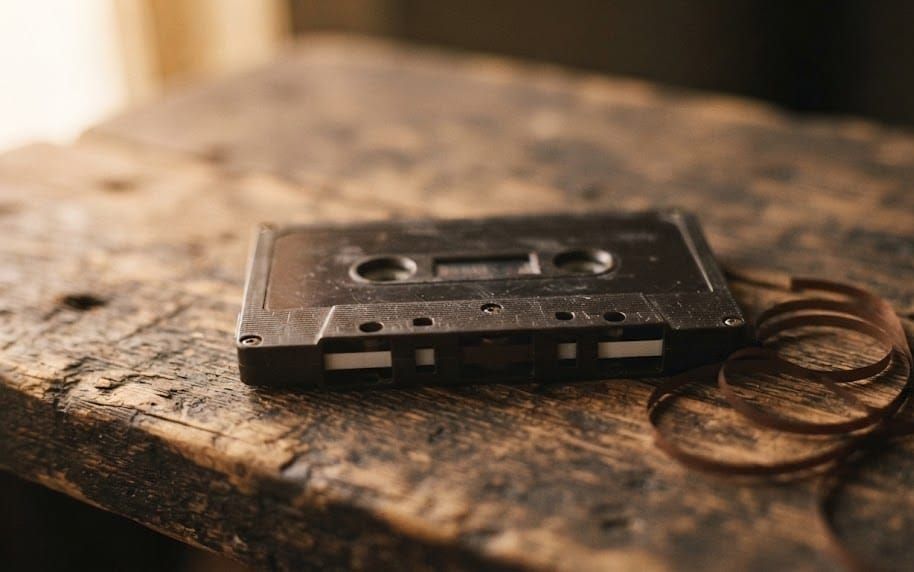
There is something quietly radical happening in bedrooms, record stores, and online communities across the world. Young people — many of whom were not yet born when cassette tapes were considered obsolete — are buying them, collecting them, making them, and falling in love with them. Not out of nostalgia, exactly. They have no nostalgia to draw from. They are discovering something for the first time, and that discovery is telling us a lot about what this generation actually wants from music.
The Algorithm Didn't Give Them This
Streaming made music available everywhere, all the time, for almost nothing. That should have felt like freedom. For many people it does. But there is a growing group of younger listeners who found that endless access came with a strange cost: music started to feel weightless. Disposable. A recommendation engine cannot tell you why a song matters. It can only tell you that you might like it.
We have written before about how digital habits are quietly eroding the way we actually listen, and cassette culture is, in part, a response to exactly that. A tape has a Side A and a Side B. It has a finite length. It resists shuffle. To listen to it, you have to commit to it, and that commitment, however small, changes the experience of hearing music.
Physical Objects in a Frictionless World
Gen Z grew up with near-total digital fluency, but that fluency also produced something like hunger — a desire for objects that have weight, texture, and resistance. Vinyl has been riding that wave for years. Cassettes are different, though. They are smaller, cheaper, more personal, and more imperfect in a way that feels honest rather than precious.
There is also something about cassettes that vinyl does not quite offer: the sense that anyone can make one. A turntable requires mastery. A mixtape requires intention. The act of choosing which songs go in which order, of recording them onto a tape with someone specific in mind — that is not a technical skill. It is an emotional one. And that is exactly the kind of thing that a generation raised on curated playlists and digital gifting has started to miss, even if they have never had it before.
Part of what makes the cassette so compelling is its impurity. As we explored in our piece on why we crave tape hiss in a flawless digital world, there is something psychologically significant about a format that wears its age — a format that sounds like it has been somewhere, been held, been loved.
The Mixtape as a Love Language
The cassette mixtape carries a particular mythology. It was a way of saying something you could not quite say out loud — through a sequence of songs, through handwritten track lists, through the time it took to make it. That meaning did not disappear when the format did. It just lost its container.
What younger listeners are discovering is that the container matters. A Spotify playlist sent in a text message and a cassette handed to someone in person are not the same gesture. One is free and instant. The other cost something — time, thought, care — and that cost is part of the message. As we put it in a piece on why a cassette gift feels more personal than a playlist link, the physical act of giving changes the emotional weight of the thing being given. That is not sentimentality. That is how human beings actually work.
The Aesthetic Is Real, But It Is Not the Point
Yes, there is a visual dimension to the cassette revival. Tapes photograph beautifully. They fit neatly into a certain kind of curated aesthetic that thrives on social media. That is true, and it would be dishonest to ignore it.
But spend any time in cassette communities — on Reddit, on Discogs, in the comment sections of unboxing videos — and you quickly sense that the people who are most passionate about tapes are not primarily interested in the look of them. They are interested in the feeling of them. The ritual of rewinding. The fact that it can break, or stretch, or get tangled — and that surviving that makes you care about it more, not less.
Fragility is underrated. In a culture that optimizes everything for durability and convenience, choosing something that requires handling turns out to feel like a small act of intention.
What This Means for Music as a Gift
One of the most interesting things about the cassette revival is how naturally it maps onto gift-giving. A custom cassette is not just a music delivery system. It is a document of a relationship, a moment, a feeling. It says: I thought about you specifically, and I chose these songs for you, and I want you to have something you can hold.
That is why custom mixtapes are resonating now — not as retro novelty, but as one of the few ways left to give music as a genuine, considered gift. In a world where anyone can share any song instantly, taking the time to curate, sequence, and personalize a cassette is a statement about how much you care.
If that feeling resonates with you, start creating your own mixtape — and give someone something they will not be able to swipe away.