How to Make a Thank You Gift Feel Personal With Music
Real gratitude deserves more than a gift card. Here's how to turn a thank you into a mixtape that actually says what you mean — and why the note matters as much as the songs.
Saying thank you with a gift is harder than it sounds, mostly because "thank you" gifts tend to default to whatever's safe and forgettable — a bottle of wine, a box of chocolates, a gift card that says the right amount of effort was made without saying much else. None of it is wrong. It's just that gratitude, the real kind, usually deserves something more specific than what's available at the checkout counter of a grocery store on the way to someone's house.
Music solves that problem in a way most people don't think to reach for. A thank you gift built around songs isn't really about the songs themselves — it's about what choosing them proves. Picking a handful of tracks that mean something to the relationship, rather than grabbing something generic, sends a message that's hard to fake: I paid attention. That's the whole thing gratitude is supposed to communicate, and it's the one thing most thank you gifts fail to do.
The starting point isn't a genre or a mood — it's the specific thing you're actually thanking someone for. A mentor who helped you through a rough professional stretch deserves a different mixtape than a friend who kept you company through a bad year, and both are different from a neighbor who watered your plants for two weeks without being asked twice. Before picking a single song, get clear on what the gratitude is actually about. That answer usually points toward the songs themselves — the ones that were playing during the thing you're thanking them for, or the ones that capture the feeling of relief, or support, or friendship that they gave you.
If the connection is recent or situational rather than deeply personal, don't force intimacy that isn't there. A thank you gift for a colleague who covered your shifts for a month doesn't need to dig into anyone's emotional history — it can be lighter, built around shared references from the office, an inside joke turned into a song choice, something that says "this was thoughtful" without trying to say "I know your whole life." Not every music gift needs the same emotional weight to still feel personal; calibrating the depth to the actual relationship is what keeps it from feeling either hollow or overdone.
Where it gets deeper — thanking a parent, a longtime friend, someone who showed up for you during something hard — the songs can carry more of the actual message. This is where it helps to think less like a playlist and more like a letter that happens to be made of music. What's the arc you're trying to build? Maybe it opens with something that captures how things felt before they helped, moves through a track that represents the turning point, and closes on something that reflects where things landed because of them. The same instinct that makes a memory-based gift land applies just as well here — you're not compiling favorites, you're telling a small story in sequence.
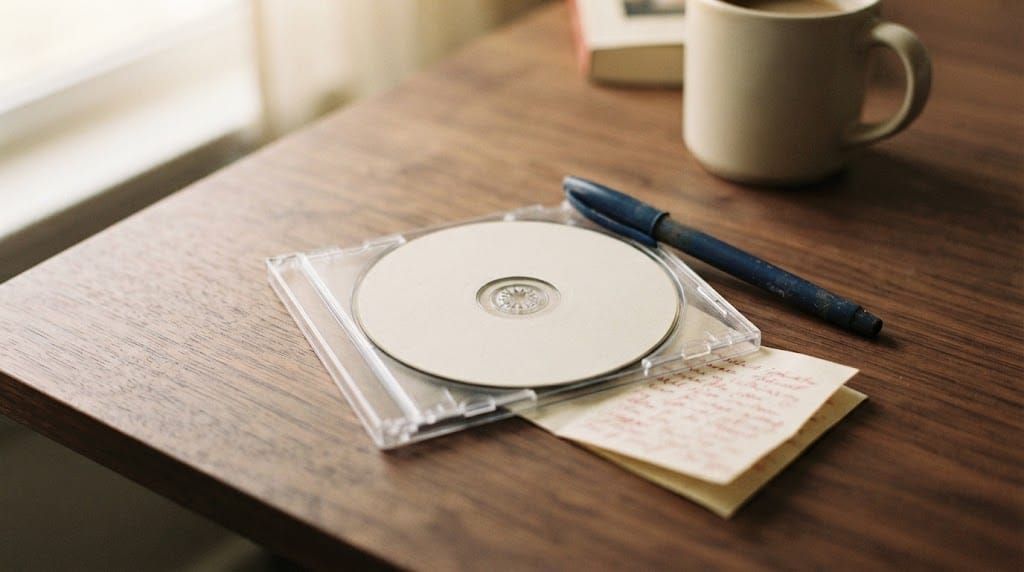
The format matters more than people assume. A digital playlist link is fine as a supplement, but as the entire gift, it tends to disappear into the same scroll as everything else someone's ever been sent. A physical version — a CD or cassette they can actually hold — signals a different level of effort almost automatically, before they've even pressed play. It sits on a desk or a shelf as a reminder, which a Spotify link buried in a text thread never does. That's really the difference between a gesture and an object: physical music gifts tend to feel more substantial than their actual cost, simply because someone had to slow down and actually make the thing.
One detail people consistently skip, and shouldn't: a short note explaining why these particular songs. Even two or three sentences — what you were thankful for, why a specific track made the cut — turns a collection of music into something closer to a keepsake. Without that context, even a well-chosen set of songs can read as "here's some music I like," which misses the entire point. The note is what makes the gratitude legible; the songs are what make it feel real.
None of this requires expensive production or professional curation. The two things doing all the actual work are specificity — songs chosen for this exact person and this exact reason, not a generic "thank you" playlist — and follow-through, meaning it exists as something they can hold rather than something they'll forget to open again. Put those two things together and even a five-track mixtape says more than most gifts twice its price.
If there's someone you've been meaning to properly thank — not just acknowledge, but actually thank — this is usually a better use of the effort than another card. Start creating your own mixtape, and let the songs do what a generic gift never quite manages: say exactly what you mean.