How to Make a Cassette J-Card for Your Mixtape
The songs are recorded and the tape is in its case. Now it needs a cover that tells someone what's inside and who it was made for.
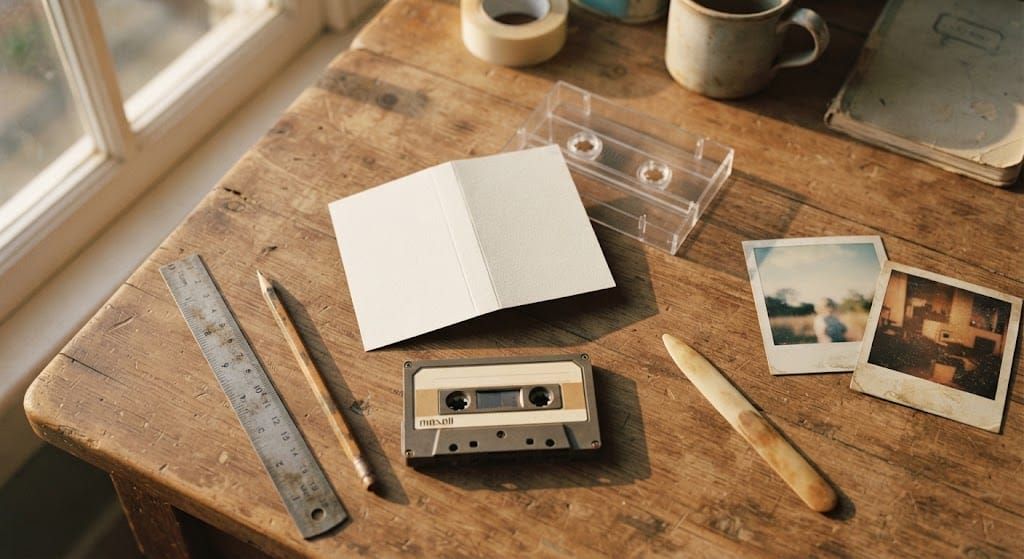
The songs are recorded. You've listened back twice, fixed the gap between track four and five, and written the order on the back of an envelope so you won't forget it. The tape sits in its case, finished. And then you notice the case itself: clear plastic, a blank paper insert, nothing that tells anyone what's inside or who it was made for.
That folded piece of paper is called a J-card, named for the shape it makes when you look at it from the side. It's the cover, the spine and the tracklist all in one, and it's the first thing the person you're giving the tape to will see. A good one turns a cassette into something that looks finished and intentional. A rushed one, or none at all, makes even a carefully made mixtape feel like a draft.
The good news is that making one at home is easier than it looks, as long as you get the measurements right before you get creative.
Understanding the shape before you design
A J-card has three panels. The front is the cover, the part that faces out through the case. Next to it comes the spine, a narrow strip that shows when the tape sits on a shelf. The third panel is a short flap that tucks behind the cassette, and many people use it for the tracklist or a short message.
The standard card is about 102 mm tall. The front panel is usually around 65 mm wide, the spine roughly 12 to 13 mm, and the back flap around 15 mm, although cases vary slightly between manufacturers. Before you design anything, take the paper insert from your own case, unfold it and measure it. Those few minutes save you from printing a beautiful cover that's two millimetres too wide to close.
If you want space for a longer tracklist or a handwritten note, you can extend the card with an extra panel that folds inside the case. It's worth it for a gift. Someone opening a mixtape usually wants to read what's on it before they press play.
Designing a cover that says something
The best mixtape covers rarely look professional. They look personal. A photo you took together, a scrap of handwriting scanned at high resolution, a colour that means something to both of you, or simply a title that only the two of you will understand. The cover should feel like the beginning of the conversation the music continues.
Keep the spine readable. A short title and maybe a date is enough, in a font large enough to read from across a room. On the back flap, write the tracklist split into Side A and Side B, because that small detail is part of what makes a cassette feel like a cassette. If you've ever wondered why a tape lands differently from a shared link, the way a cassette gift feels more personal than a playlist comes down to exactly these details: something you can hold, read and keep.
Don't forget the labels on the tape itself. Small stickers marked Side A and Side B, with the title repeated, make the whole object feel coherent when it comes out of the case.
Printing it properly
This is where most homemade J-cards go wrong. Design your file at 300 DPI so photos and text stay sharp, and add 3 mm of bleed around the edges so a slightly off cut doesn't leave a white line. When you print, set the scale to 100% rather than "fit to page", which shrinks everything just enough to stop it fitting the case.
A slightly heavier paper, somewhere around 120 to 160 gsm, folds cleanly without cracking and feels better in the hand than standard printer paper. Score the fold lines with a ruler and the back of a butter knife before folding, and print a test copy on plain paper first to check it against your case. It's a small habit that saves a lot of reprinting.
A shortcut if you'd rather skip the maths
If measuring panels and setting up bleed lines sounds like more than you want to deal with, our editable cassette cover template for Canva has it done for you. It includes the outside and inside J-card layouts, the spine, Side A and Side B labels in two sizes, and a print guide with the bleed and scale settings already worked out. You open it in Canva, add your photos and words, and export a file that's ready to print. A free Canva account is enough for most edits, although some premium elements you might choose to add can require Canva Pro.
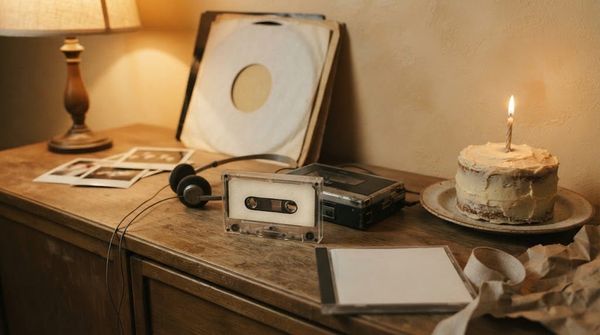
It's a good option if you already have your cassettes, a deck to record on and an evening to spend on the details. If you're starting from zero and still need something to play the finished tape on, a simple portable cassette player is enough to record, check and enjoy it.
When you'd rather have it made for you
Not everyone has a tape deck, blank cassettes and the patience to record in real time. And sometimes the point of a gift is the songs and the meaning behind them, not the hours of recording. If that's you, you can send us the songs and the words you want on the cover, and we'll make the custom cassette or CD for you, recorded, printed and packed, ready to give. Our guide to choosing a custom mixtape gift can help you decide which format fits the person and the moment.
Either way, the J-card is where your mixtape stops being a tape and becomes a gift. It's the place where you name what the music means, in your own words and your own pictures. Whether you design it yourself or let us handle the whole thing, give it the same care you gave the tracklist.
When you're ready, start creating your own mixtape.